A rental car can connect the different parts of Muscat conveniently when you plan where to stop as carefully as where to drive. Start with your accommodation, the actual entrances to places you will visit and the parking arrangements at each destination. This guide focuses on everyday decisions that reduce confusion: lane preparation, unfamiliar controls, parking signs, payment confirmation, fuel and return logistics. It is not a substitute for current road signs or official instructions. Vrenty Car is an affiliate and editorial website; the supplier named in your Localrent booking provides the car and rental contract.
Think in districts and actual entrances
Muscat is spread across several districts, so a destination described as central may not be close to your hotel. Group activities that make geographic sense rather than repeatedly crossing the city for short visits. Look up the actual vehicle entrance and parking access before leaving. A museum, hotel or shopping destination can have an entrance that differs from the most prominent map pin, and recovering from a missed access road may require continuing to a legitimate turn.
For a first day, choose a manageable sequence with room for breaks. You do not need to prove the value of the rental by driving to every landmark immediately. A car can be useful for reaching a district and then staying parked while you walk. Compare Muscat car rental options with your accommodation's parking and your passenger needs in mind. Vehicle dimensions and luggage space can be more relevant to a city stay than an impressive category name.
Set up before the car moves
Adjust the seat, mirrors and navigation while parked. Learn the lights, indicators, wipers, transmission and parking brake before joining traffic. If the rental is unfamiliar, ask the supplier to explain any control you cannot identify confidently. Pairing a phone, selecting a destination or adjusting a complicated menu should not compete with the first junction. A passenger can manage navigation, but the driver should still understand the broad direction and destination.
Secure bags and equipment so they do not move into the driver's space. Check seat belts and the fit of any requested child seats, asking for assistance with unfamiliar equipment. Do not accept an unresolved problem simply because the representative is in a hurry. Take the time to record the car's condition and raise warning lights or other concerns before departure. A clear handover gives you a better starting point than discovering a basic issue while trying to follow city signs.
Use signs and markings as the immediate guide
Oman uses right-hand traffic. Follow the current signs, lane markings, signals and instructions at the road you are actually using. Avoid relying on a memorized general speed figure for every urban road; limits can differ and temporary restrictions may apply. This page does not publish a universal speed or fine table. For regulatory questions, use the Royal Oman Police and current official information, and take posted instructions seriously even when navigation suggests otherwise.
Prepare for exits early and make lane changes deliberately when safe. If you miss a turn, continue to a legal alternative and let navigation recalculate. Do not reverse or stop abruptly to recover the planned route. At a roundabout or complex junction, follow the markings and signs rather than copying a neighbouring driver whose destination you do not know. Leave sufficient space and avoid allowing pressure from another vehicle to determine a speed or manoeuvre you are not comfortable making safely.
Keep attention on driving
Put the phone where it can provide necessary navigation without inviting interaction, and stop in a safe permitted place before making changes. The Royal Oman Police's published traffic material identifies handheld phone use and seat-belt failures as offences; exact current penalties should be verified through official channels. More generally, do not let calls, photographs or messages compete with driving. A passenger wanting a picture should wait for a proper stopping place.
Build enough time into appointments that an unexpected queue does not become pressure to hurry. Traffic conditions can vary, and a route that was easy on one trip can take longer on another. Check the likely route shortly before setting off, but do not assume an app can anticipate every delay. If you are tired after a flight or a long outing, rest or arrange suitable transport. The practical benefit of a rental includes choosing when to drive, not driving at every opportunity.
Read the parking space, not just the empty gap
Before leaving the vehicle, look for signs defining who may park, whether payment is required and any time restriction. A space can be reserved, controlled by a private property or subject to municipal rules. A clear kerbside gap is not evidence that parking is permitted. Avoid blocking entrances, pedestrian routes or access needed by other road users, even for a short errand. When signs are unclear, choose an unmistakably permitted alternative or seek authoritative clarification.
At an attraction, ask whether visitor parking is provided and whether any conditions apply. At accommodation, confirm whether parking is included, where you may enter and what happens if the assigned area is full. Do not assume that a booking platform's general parking description guarantees a specific bay. For a larger rental, check height or size restrictions before entering a garage. A slightly longer walk from a suitable space can be easier than repeated manoeuvring in a crowded or uncertain area.
Confirm payment actually succeeded
Muscat Municipality's parking e-services provide official routes for parking information, including SMS and Baladiyeti services. Use the method shown for the actual location and check the current instructions. We do not reproduce a universal tariff, free-parking timetable or payment format because the signs and official service should govern the transaction you are making. Private parking facilities can use a different system from municipal spaces.
Enter the rental's registration details accurately and check the confirmation before walking away. A sent message, attempted app payment or spinning screen is not necessarily a valid parking session. Verify the vehicle, period and expiry shown in the response, and retain it. If a foreign phone or payment method cannot complete the process, use another permitted official method or another parking location. Do not assume technical difficulty cancels the obligation to pay, and do not rely on an unverified stranger's assurance that the space is free.
Make Muttrah a park-and-walk visit
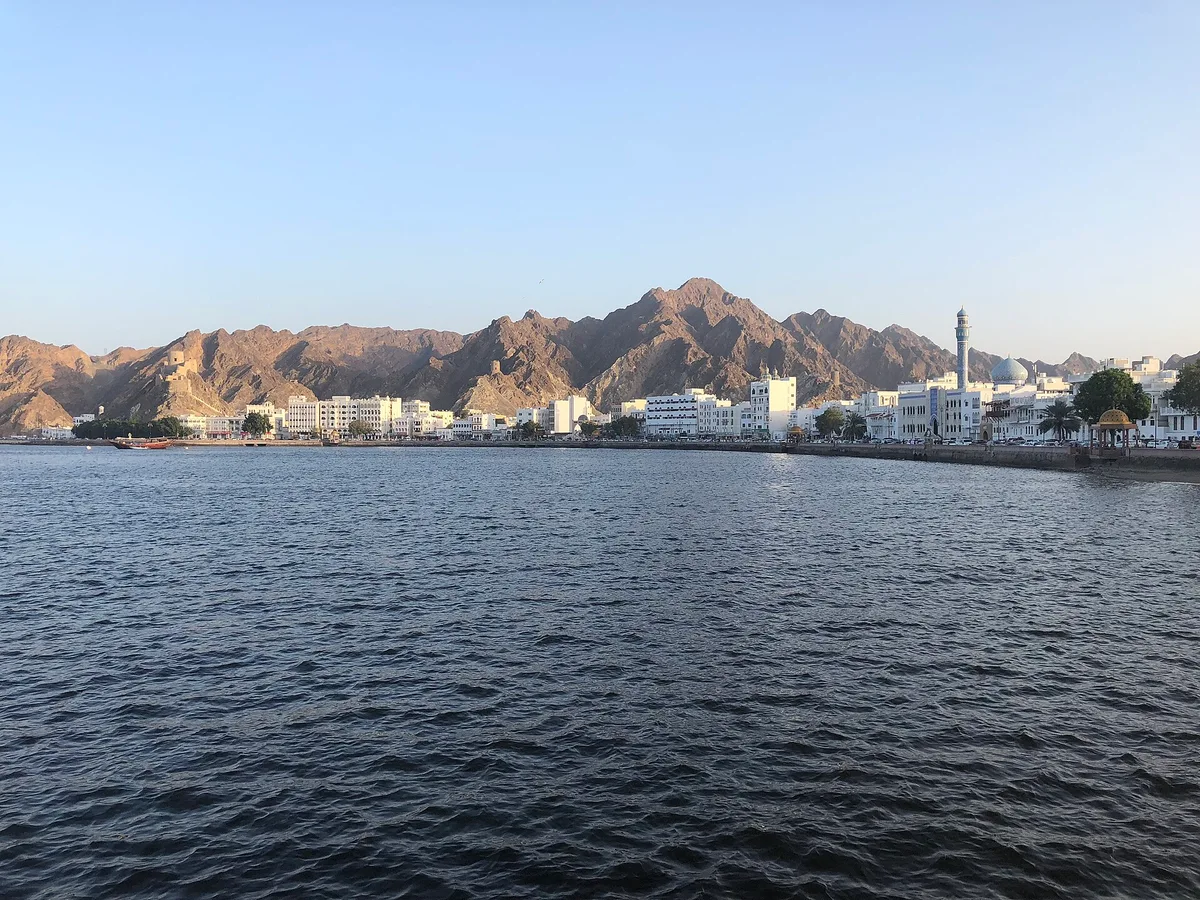
For the souq and waterfront area, choose a permitted arrival and parking point, then explore the places you want on foot where practical. Driving repeatedly to save a short walk can introduce extra turns and parking searches. Check current access and any restrictions near the destination, and be considerate of residents, deliveries and pedestrians. A visitor itinerary should not require entering a narrow lane that is better left clear.
If your party includes someone with limited mobility, verify the actual access and drop-off options with the destination rather than assuming every waterfront section or entrance is equally suitable. Arrange a legal stopping place and a clear meeting plan if the driver parks separately. Keep the car location saved on a phone and note a landmark in case navigation becomes confusing on the return. Organize bags out of sight before parking and avoid leaving valuable items exposed while you browse.
Manage heat while the car is parked
Consider shade or covered parking where available, but follow the same permission rules as elsewhere. A shaded space reserved for another user is not an acceptable alternative. Plan to ventilate and cool the cabin appropriately before passengers settle in, and keep drinking water available for the day. Do not leave children, dependent passengers or anyone unable to leave independently in a parked car while you run an errand.
Take care with items that can be damaged by heat, including some medicines and electronic equipment. Follow the storage instructions for anything essential to your travel. Do not leave the engine running unattended as a workaround. If the air conditioning or another necessary system is not working properly, notify the supplier and ask for an appropriate solution. The vehicle's suitability for your party is a practical requirement, particularly when your itinerary involves repeated stops during hot conditions.
Treat rain and poor visibility as a changed journey
Check official weather warnings when conditions are unsettled, and give yourself permission to delay a nonessential drive. Reduce the demands of the itinerary if visibility or surface conditions make the planned route unsuitable. Follow barriers and official instructions. The Royal Oman Police has advised drivers to avoid crossing flooded wadis; do not try to estimate safety from the height of the vehicle or from another driver proceeding ahead.
Avoid parking in an obviously vulnerable low-lying area when warnings or local instructions indicate flood risk. If a road is closed, select an authorized alternative rather than a route through an unfamiliar valley or track. A city journey can still intersect affected roads, so do not assume that remaining within Muscat removes the need to pay attention. This guide cannot provide real-time conditions; the official Oman meteorology service and current local instructions are the relevant sources before departure.
Fuel with the return policy in mind
Ask the supplier to identify the correct fuel for the car and confirm the agreed return requirement. Note the collection gauge reading on the handover record. When refuelling, make the requested fuel clear and check the transaction before leaving. Keep a receipt when it may be useful for the final return, particularly if the station is close to the handover time. Do not assume every car in a familiar-looking category uses the same fuel.
Choose a convenient final fuel stop on the correct side of your return route and leave a margin for access or payment problems. A station near the airport on a map may require a different approach than you expect. If the wrong fuel is put in, avoid starting or continuing to drive the car and contact the supplier immediately for instructions. Do not try to solve it by topping up with the correct fuel or arranging an unauthorized repair without discussing the situation.
Respond to a parking notice with records
If you receive a notice, record its details and check the issuing authority or operator through an official channel. Keep your parking confirmation, photographs of relevant signs and the location and time. Ask the supplier how notices linked to its vehicle are handled under the agreement. A municipal penalty and a supplier administration charge are different items, so request an explanation of each rather than treating an unexplained total as one fixed official fine.
Do not ignore a notice because you believe payment succeeded, and do not pay an unexpected message without verifying that it relates to the vehicle and an authentic process. Use the evidence to ask a specific question. Vrenty Car cannot cancel a penalty or determine legal liability. For rental-related follow-up, the help guide explains how to organize a useful message with a booking reference and supporting records. Accurate details are more helpful than a general complaint about parking being confusing.
Finish urban driving with a planned handover
On the last day, confirm the return address, access direction and contact method before starting the final journey. City collection and airport return require a specific agreement if they differ. Allow time to unload, inspect the car and reach your next transport. Our Muscat Airport car rental guide explains why the rental appointment and the airline check-in deadline must be planned separately.
Before handing over the keys, check storage compartments and record fuel, mileage and condition. Ask how the return is acknowledged and how the deposit process proceeds. If you have planned a final inland outing, the Muscat to Nizwa guide can help you assess whether the day leaves enough room for a calm return. Avoid using the last available minute of the rental as the target for arriving at an unfamiliar location.
- Before moving: adjust controls, secure passengers and set the correct entrance in navigation.
- Before parking: read the sign, check the space and understand the payment method.
- Before walking away: verify the parking confirmation, lock the vehicle and save its location.
- Before returning: confirm the handover, fuel requirement and time needed for onward travel.
Questions & answers
Is all Muscat parking paid?
Do not apply one rule to every location. Read the signs and the relevant municipal or private operator's instructions for the space you use. This guide does not promise free periods or a universal charge across the city.
Can I use a foreign phone to pay for parking?
Check the requirements of the official payment method at the location. Do not assume an SMS or app transaction will work with every phone or account. Confirm that a valid session was issued, and use another permitted method or space if it was not.
Should I choose the smallest possible rental?
Choose manageable dimensions without sacrificing safe passenger and luggage capacity. Consider child seats, mobility equipment and airport bags as well as daily parking. The most useful car is the one that fits the complete trip and the driver's comfort.
Who deals with a vehicle fault during a city outing?
Contact the supplier's verified assistance channel and describe the symptoms and location. Stop safely when the fault makes continued driving inappropriate. Do not authorize repairs on the assumption that Vrenty Car or Localrent will reimburse them without the applicable procedure being followed.